From AI Idea to Editable Design: The ChatGPT–Canva Workflow
Discover how ChatGPT and Canva can work together to transform a simple idea into a powerful, fully editable visual. This project shows how AI can accelerate content creation while human judgment, creativity, and design control ensure the final result remains clear, professional, and valuable.
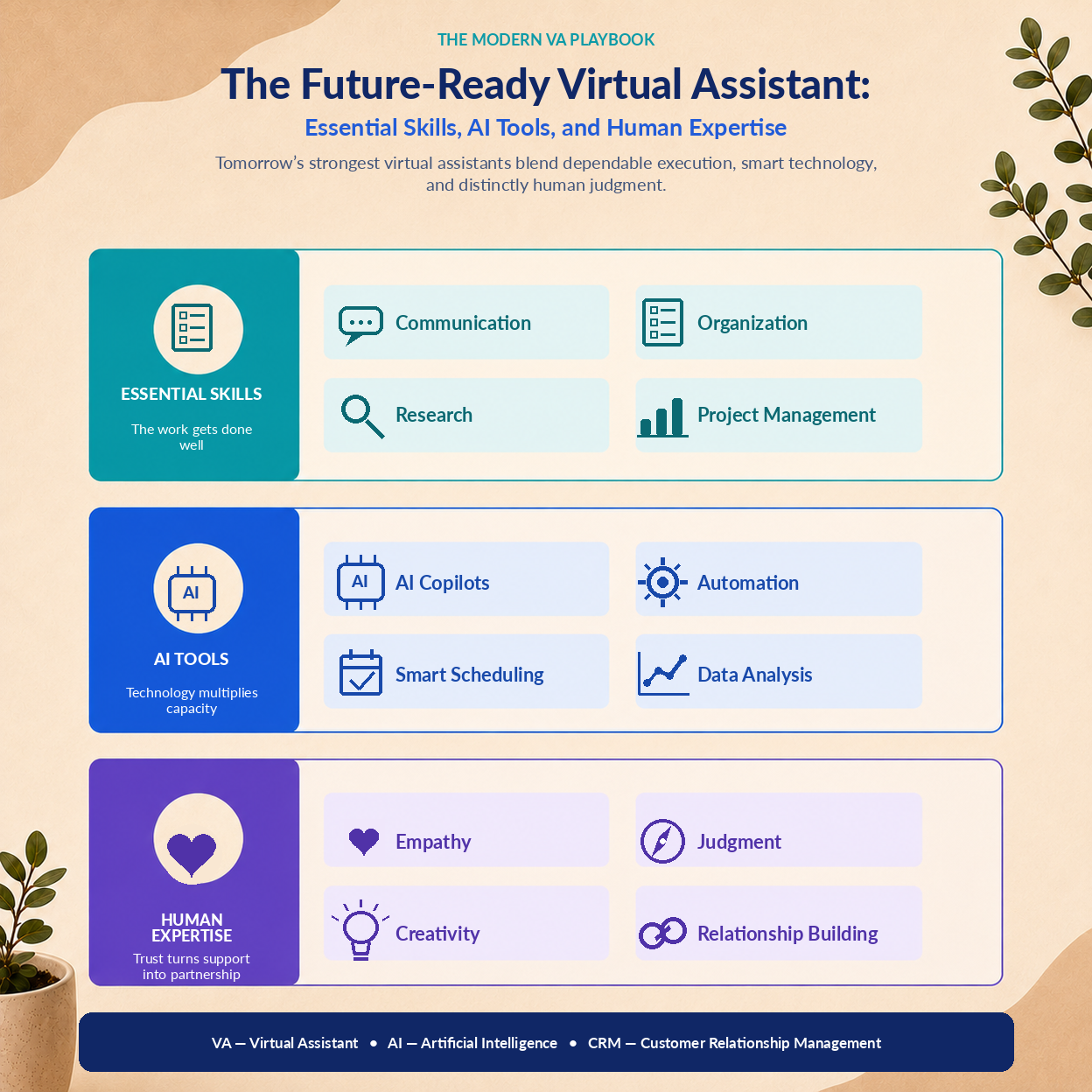
Content creation is no longer about designing everything manually. It is about combining AI speed with human creativity and control. The Modern VA Playbook was created using ChatGPT to develop the concept and generate the visual, while Canva was used to transform it into a customizable and reusable design.
The process is simple. Step 1: Plan the content. Decide on the title, message, audience, colors, design style, and image size. Clear instructions produce better results. Step 2: Create the concept in ChatGPT. Ask ChatGPT to organize the information, write concise content, suggest the layout, and develop the visual direction. Step 3: Generate the image. Request the complete design and continue refining it by adjusting the text, colors, illustrations, spacing, or branding. Step 4: Review the result. Check the spelling, readability, layout, and accuracy before transferring the image.
Step 5: Connect the design to Canva. Connect Canva to ChatGPT when the integration is available, or save the generated image and upload it directly to Canva. Use the original image as the visual reference for the editable version. Step 6: Make the design editable. Use Canva’s AI editing and layering tools to separate or recreate the text, shapes, icons, illustrations, and background. Some elements may need to be rebuilt manually to achieve a clean and fully editable design. Step 7: Customize and finalize. Correct the text, apply brand colors and fonts, adjust the layout, add a logo, and resize the design for social media posts, presentations, blogs, or marketing materials.
This workflow combines the best of both tools: ChatGPT turns ideas into strong visual concepts, while Canva provides the flexibility to edit, brand, and reuse them. AI accelerates the process, but human judgment ensures that the final design is accurate, professional, and purposeful. The future belongs to virtual assistants who know how to combine intelligent tools with creativity, communication, and attention to detail.